Home Office Planning
Designing a Home Office Around a Solid-Wood Shaker Desk
A desk can do more than hold a screen or a stack of papers. In a thoughtfully planned home office, a solid-wood Shaker desk becomes the calm center of a practical landscape—one shaped by good proportions, useful storage, and the natural character of wood.
Published November 9, 2026
A home office often begins as a corner claimed by necessity: a spare room, a quiet stretch of wall, a place where a laptop can be opened between other parts of the day. Over time, that small territory takes on a larger role. It becomes a place for concentrated work, planning, reading, or correspondence. The furniture chosen for it can either help those activities settle into a rhythm or leave the room feeling improvised.
A solid-wood Shaker desk offers a useful starting point. Its appeal is not built on ornament or novelty. Rather, its straightforward form brings the eye back to proportion, material, and purpose. The visible grain of the wood gives the room a sense of natural variation, while drawers and a generous work surface can support the ordinary rituals of a working day. To build a room around such a desk, begin not with decoration but with observation: what work happens here, what needs to stay close, and how does the room move around you?
Begin with the work, not the furniture
The right desk depends on the work it must accommodate. Someone who writes by hand may value an uninterrupted surface and a small drawer for notebooks, pens, and paper clips. A person working with a monitor, keyboard, and documents needs enough depth to keep the screen at a comfortable distance while leaving space for reference materials. A home office that regularly handles paperwork may need dedicated file storage, whether built into the desk or placed nearby.
For several days, notice what you reach for and where it ends up. Are chargers and stationery scattered across the surface? Do folders collect beside the chair? Are books consulted every morning or only occasionally? These patterns offer better guidance than an abstract wish for “more storage.” A desk should make frequent tasks easier, not simply provide the greatest number of drawers.
Separate essentials from occasional-use items. The things needed throughout the day—writing tools, a notebook, a headset—should be easy to reach without requiring a search. Materials used once a week can live in a nearby cabinet or bookcase. Archival papers and supplies used seasonally may belong elsewhere. This simple hierarchy helps keep the desk’s work surface open enough to change with the task.
Measure the room as a working landscape
Before settling on a desk footprint, measure the room and make a simple floor plan. Note the width of the walls, the swing of the door, the position of windows, outlets, heating elements, and any built-in features. Then mark the proposed desk dimensions on the plan. Painter’s tape on the floor can help translate those numbers into a more tangible outline.
The desk itself is only part of the space it occupies. Include the chair and allow room to pull it back, sit down, and stand without maneuvering around a wall or another piece of furniture. Think about the route from the entrance to the desk and from the desk to storage. A room may look spacious on paper but feel cramped if the chair blocks the main path or a drawer cannot open fully.
Consider the desk’s proportions in relation to the room. A large work surface can be valuable when the work demands it, but a desk that overwhelms a compact room may leave no comfortable space for movement. A narrower model can make a small office feel more open, though it may require more disciplined organization. The goal is not to maximize the furniture; it is to create enough useful surface and clearance for the room to function well.
- Measure the footprint: Record the desk’s width and depth, and compare them with the wall or floor area available.
- Allow for the chair: Include space for the chair to move and for you to sit and rise comfortably.
- Check access: Confirm that doors, drawers, cupboards, and nearby routes remain clear.
- Plan for equipment: Account for monitors, lamps, cables, and other items that occupy surface or wall space.
- Look beyond the desk: Make room for storage that supports the work without crowding the center of the room.
Choose storage that earns its place
Drawers can make a desk feel orderly, but their value depends on what goes inside them. Small drawers are useful for compact supplies and personal items. Deeper drawers can hold notebooks, envelopes, or equipment that would otherwise occupy the desktop. If the work involves active files, think carefully about whether they belong in the desk or in a separate filing unit. A drawer intended for accessories may not be a practical substitute for purpose-built file storage.
The distinction between concealed and open storage also matters. Drawers and cabinets hide visual clutter and protect supplies from dust. Shelves keep books and reference materials visible and within reach. A balanced office usually needs both, but the proportions depend on the person using it. A room used for reading and research may benefit from open shelving; a space with sensitive paperwork or many small supplies may need more enclosed storage.
Avoid treating every empty shelf as an invitation to fill it. A little breathing room makes it easier to retrieve items and adapt the office over time. Group materials by use—current projects together, reference books together, supplies together—and leave a clear location for work in progress. The best storage system is one that makes putting things away as straightforward as finding them.
Let Shaker simplicity do practical work
Shaker furniture is often recognized by its clean lines, restrained detailing, and attention to function. In a home office, that visual clarity has practical value. A desk with a composed, uncomplicated form can sit comfortably alongside different styles of chair, lighting, or shelving without dictating the character of the entire room. Rather than competing for attention, its shape gives the room a stable point of reference.
A simple silhouette is not the same as a featureless one. The natural grain of a solid-wood desk gives its surface subtle variation: lines, tones, and patterns that shift with the light. That material presence can make a workroom feel less like a temporary station and more like a place intended for sustained use. The wood also brings a tactile quality to everyday routines, from setting down a notebook to opening a drawer.
Construction and details deserve consideration alongside appearance. Look for a desk designed for regular use, with drawers that operate smoothly and a frame that feels stable. If the desk is made to order, confirm its dimensions and configuration before planning the rest of the room around it. Practical details—such as drawer placement, leg clearance, and the available working area—can shape comfort as much as the overall style.
Think carefully about wood tone and finish
Wood is not a single color or surface. Species, grain, and finish all influence how a desk appears in a room. Maple often reads lighter and more even in tone; cherry tends to deepen in color with time and exposure to light; walnut commonly brings a darker, more pronounced character. The precise appearance varies from piece to piece, which is part of the appeal of natural material.
A finish affects both appearance and care. An oil finish can emphasize the grain and leave the wood’s natural character visible. Other finishes may create a different degree of sheen or surface protection. When evaluating a desk, ask what care the finish requires and what products are appropriate. Follow the maker’s guidance rather than assuming every wood surface should be cleaned or treated in the same way.
Compare the desk with the room’s existing materials in the light where it will be used. A wood tone that looks harmonious under showroom lighting may appear different beside a window or under warm lamps. Nearby floors, shelves, and trim do not have to match exactly. In fact, a room can feel more natural when wood tones relate through warmth or depth instead of being identical. Let contrast be deliberate, and avoid introducing so many competing finishes that the desk loses its visual place.
Place the desk with light and daily rhythms in mind
Light changes how a workspace feels over the course of a day. A desk near a window can make use of daylight and offer a view beyond the room, but direct sun may create glare on a screen or fall across paperwork at an awkward angle. Observe the space at the hours when you are most likely to work. Notice where daylight travels, how shadows shift, and whether a monitor would face the window or sit with it behind you.
If possible, position the desk so the screen can be arranged without persistent reflections. A task lamp provides focused light when daylight fades, while general room lighting helps prevent a bright screen from becoming the only illuminated area. Keep cords and charging points in mind during placement. Cable management may be easier when the desk is near an outlet, but the route should not create a trip hazard or leave wires stretched across a walkway.
The surrounding room matters, too. A desk placed in a quiet corner may support concentration; a location near the household’s main traffic may be more convenient for shared use but harder to settle into. Consider how privacy, sound, and interruptions affect the kind of work done there. Even modest changes—such as turning the desk away from a busy passage or keeping frequently used items within reach—can make the workday feel more composed.
Build a room around the desk, not around excess
Once the desk’s position and role are clear, add only the pieces that solve a real problem. A chair should fit the user and the desk’s height. A bookcase can keep reference material accessible without consuming the work surface. A small cabinet may be useful for supplies or files, while a nearby bench can provide an occasional place to set a bag or materials. Each addition should preserve clear paths and keep the desk as the center of activity.
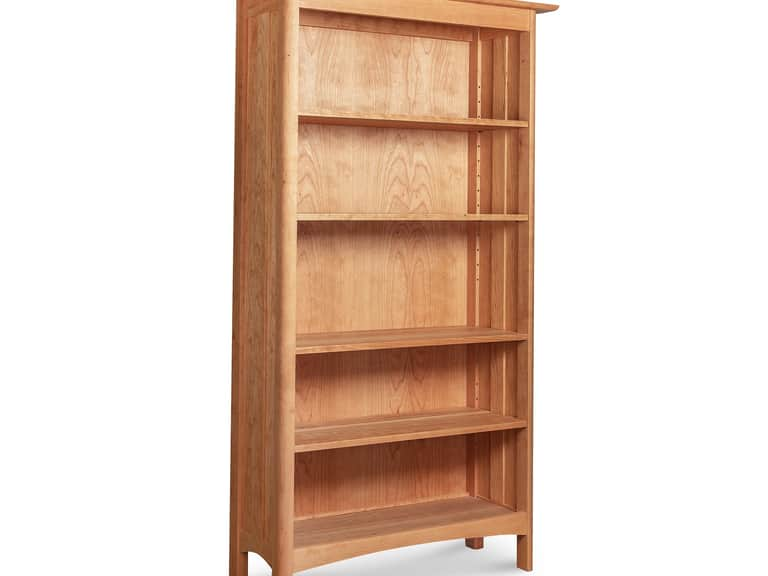
An open bookcase can help create an office that feels connected to the rest of the home. Adjustable shelves allow room for books or objects of different heights, while fixed shelves provide a consistent structure. Arrange the contents by use and leave some sections open. A few carefully chosen objects can bring personality to the room, but the shelves need not become a second desktop for everything that has nowhere else to go.
Keep visual decisions grounded in function. A desk lamp should provide useful light. A wall calendar should be visible where it helps. A modest amount of personal detail can make the space welcoming without disrupting concentration. The room should support the person working in it, not resemble a staged display that is difficult to maintain.
Care for the material and the workspace
A solid-wood desk is made to be used, and ordinary care helps preserve its surface. Use coasters beneath drinks and avoid leaving damp objects or hot items directly on the wood. Wipe spills promptly with a soft cloth. Dust regularly, and consult the manufacturer’s instructions before applying cleaners, polish, or additional oil. A finish that is maintained appropriately can continue to show the grain while serving the practical demands of daily work.
The room itself benefits from periodic attention. At the end of a work session, return frequently used items to their assigned places and clear enough of the surface to begin again easily. Once in a while, reassess what has accumulated. Tools that are no longer needed can be removed; storage can be rearranged as projects change. An office is not a fixed arrangement but a working environment that should respond to the work.
A practical center for focused work
Designing a home office around a solid-wood Shaker desk is ultimately an exercise in proportion and attention. Start with the tasks that fill the day. Measure the room and preserve the space needed for movement. Choose drawers and nearby storage according to what you actually use, and consider how the wood’s tone and finish will meet the light and materials already present.
When those decisions come together, the desk can offer more than a place to work. Its clear form establishes a calm center; its surface makes room for changing tasks; its material lends warmth without demanding attention. The result is an office that feels practical rather than crowded, personal rather than overdesigned—a place where the details support focus, one ordinary working day at a time.

