Bedroom essentials
A Layer-by-Layer Guide to Coordinating Bedding
A well-made bed is more than a stack of linens. Each layer has its own purpose: a duvet cover protects an insert, a bed skirt tidies the space below, and pillow shams bring pattern and texture into view. Understand how these pieces work together, and it becomes easier to create a bedroom that feels considered without making everyday care complicated.
At first glance, coordinating bedding can seem like a color-matching exercise. But a bed is a practical system as much as a focal point. The layers closest to the sleeper affect comfort and temperature; the outer layers help protect bedding and establish the room’s character. Good choices account for both, along with the dimensions of the mattress, the way the bed is made, and the amount of laundry care a household wants to take on.
Some people prefer a coordinated bedding set, where several pieces are designed to share a palette or pattern. Others build a bed from separate items, selecting each layer for its specific function. Neither approach is automatically better. A set can simplify decisions, while individual pieces offer more control over materials, fit, and how the room changes with the seasons.
The useful place to begin is not with a color swatch, but with a few questions: What does each item do? What size does the bed require? Which materials and closures will suit regular use? Once those practical details are clear, style becomes easier to shape—and easier to live with.
Begin with the bed’s functional layers
Think of bedding as a sequence, from the mattress outward. A mattress protector or fitted sheet sits closest to the bed, followed by a top sheet if you use one. A duvet insert, quilt, or blanket supplies warmth. A duvet cover, when used, encloses and protects its insert. Shams, decorative pillows, and a bed skirt complete the arrangement in different ways.
These components are not interchangeable. A duvet cover is made to encase an insert; a sham is usually a decorative pillow covering; and a bed skirt hangs around the base of the bed. A coordinated pattern may make the pieces look related, but their jobs—and the measurements they require—are distinct.
- Protective and sleeping layers: mattress protectors, sheets, blankets, and duvet inserts support daily comfort and use.
- Removable outer coverings: duvet covers and pillow covers can help protect the items beneath them and may be laundered according to their care labels.
- Decorative finishing layers: shams, accent pillows, and bed skirts add visual structure and help create a finished appearance.
Knowing which layers are essential in your routine helps prevent overbuying. A household that prefers a simple, easy-to-wash bed may need fewer decorative pieces than one that enjoys changing the look of a guest room or making the bed with several layers each morning.
The duvet cover: protection, color, and texture
A duvet cover is a removable fabric shell designed to fit around a duvet insert. It can help shield the insert from routine contact, while making it possible to refresh the bed’s color or pattern without replacing the entire insulating layer. For many households, that combination of protection and flexibility makes the cover one of the most useful pieces of bedding.
Fit is central to how a duvet cover looks and feels. A cover that is too small may compress the insert or leave corners unfilled; one that is too large can allow the insert to shift and bunch. Compare the cover’s stated dimensions with those of the insert rather than relying on a size label alone. Labels such as queen or king are helpful starting points, but dimensions can vary by maker and product.
Also check the closure. Button, zipper, and tie closures each have practical trade-offs. Buttons are familiar and easy to inspect, while zippers can provide a more continuous closure. Interior ties, when present, can help secure the insert’s corners and limit movement. Follow the product information to understand what the cover includes; not every cover comes with an insert or coordinating pillows.
Fabric contributes to the tactile and visual character of the bed. Smooth, crisp, brushed, textured, or plush surfaces create different impressions, and the best choice depends on personal preference, climate, and care habits. A chenille duvet, for example, can bring a soft, substantial surface and a rich visual texture to a room. The Gallop Claret Duvet is described as chenille, with a deep crimson color and a western-inspired look. Before choosing any particular cover or duvet, verify whether it is designed as a cover alone or as part of a set, and review its dimensions and care guidance.
Care requirements are part of the design decision. A removable cover is convenient only if its laundering instructions fit your routine. Check the care label before washing, especially for textured fabrics, decorative trims, faux leather accents, or mixed materials. When an ensemble includes accent pillows, their covers may have different cleaning requirements from the main bedding.
Bed skirts: a quiet finish at the base
A bed skirt sits between the mattress and the floor, covering the lower bed frame and the open area beneath the bed. It can soften the transition from mattress to floor, bring another color or texture into the arrangement, and make under-bed storage less visible. Its effect is often subtle, but it can help a bed feel visually complete—particularly when the frame or stored items would otherwise remain in view.
Measure before choosing one. The drop is the distance from the top of the foundation or the point where the skirt attaches to the floor. A skirt that is too short may appear suspended above the floor; one that is too long can pool, drag, or catch underfoot. The correct measurement depends on the bed frame, foundation, mattress height, and how the skirt is fitted.
Platform beds deserve special attention. Their construction may place the mattress closer to the floor or use a frame that does not have the same kind of foundation as a traditional bed. That can change where a skirt can attach and how much fabric is needed. Consider the bed’s structure and the visible gap beneath it before buying. A bed skirt should suit the actual frame, not just the mattress size.
Color also affects how the lower edge reads. A skirt that closely matches the duvet or sheets creates a quieter, continuous appearance. A contrasting shade draws the eye toward the base and can anchor the bed visually. In either case, texture matters: a plush finish may echo a soft duvet, while a smoother fabric can balance a heavily patterned top layer.
The Gallop Claret Bed Skirt is described as a plush chenille piece in a deeper crimson tone, intended to coordinate with the Gallop Claret bedding. When considering a bed skirt like this, confirm the fit and drop for your particular setup rather than assuming that a coordinated design guarantees the right dimensions.
Shams and pillow covers: the finishing accents
Shams add a decorative layer to pillows and help carry a bed’s palette or pattern upward, where it is most visible. They are often arranged behind sleeping pillows or used as a front accent, depending on their size and the look of the room. Pillow covers and shams can also help shield the pillows beneath them from everyday contact, though their construction and intended use vary.
Check the dimensions of both the pillow insert and the sham. A cover that is too small can strain the seams or distort the pillow; one that is too large may look loose. Some decorative shams are designed to have a fuller appearance, so the finished effect may depend on the insert’s dimensions and loft. Product descriptions should clarify whether an insert is included.
Consider how much contrast you want. A simple bed can gain interest from shams in a strong accent color or a tactile fabric. A patterned duvet may call for more restrained pillow coverings, allowing the main design to remain the focus. Repeating one color in a sham, throw, or nearby rug can make different elements feel connected without requiring an exact match.
Decorative details can create depth, but restraint keeps the bed usable. If pillows are removed each night, choose a number and arrangement that are easy to manage. For a guest room, a modest set of shams can add polish without filling every open space. For daily use, prioritize covers that are straightforward to remove and clean.
Coordinated sets may include euro shams or decorative pillows with trim and embellishments. Such details can introduce welcome texture, but they may need different care from plain sheets or a duvet cover. Review the materials and cleaning directions for each component, rather than assuming that every piece in a set can be washed in the same way.
Coordinated bedding sets or separate pieces?
A bedding set can make it easier to establish a unified look. Its colors and patterns have already been selected to work together, and a value set may gather several coordinating pieces in one purchase. This is useful when furnishing a room from scratch, preparing a guest bed, or seeking a more finished appearance without assembling every detail separately.
The phrase “value set” does not define a universal list of contents. One set might include a duvet cover and shams; another may contain decorative pillows or additional layers. Before deciding, read the item description carefully and confirm the sizes, number of pieces, fabric details, and whether an insert is included. A set’s name or photograph is not a substitute for its specific contents and specifications.
Separate pieces allow more precise control. You can choose a duvet cover in a material you like, use shams you already own, and add a bed skirt only if the frame would benefit from one. This approach can also make it easier to replace a single worn or stained item without changing the entire bed. The trade-off is that you must check more details yourself, including whether colors, fabrics, and dimensions work together.
There is a useful middle ground: start with one coordinated foundation, then add individual items in complementary colors or textures. A set with an earthy palette, for example, can be paired with plain sheets in a related neutral. A bold duvet may be balanced by understated shams. Coordination does not require every piece to share the same print; it depends on a deliberate relationship among color, scale, and texture.
Several named options illustrate the range of looks a coordinated set can offer. The Hitchin’ Post Desert Value Set is described with desert-inspired tones and faux leather accents; the Sunset Canyon Value Set combines an earthy palette with a Pendleton-pattern fabric and textured details; and the Sun Valley Mojave Value Set uses a darker backdrop with western-inspired accents. The Kinsale Oxford Value Set draws on wool plaid and warm faux leather details, while Puesta Del Sol brings together solid washable wool colors. These descriptions indicate different aesthetic directions, but the exact contents and care requirements should always be checked against each product’s specifications.
The Gallop Claret Value Set, meanwhile, is described as a coordinated ensemble built around a deep crimson duvet cover and decorative pillows with leather accents. If choosing this or any set, confirm the individual components, sizes, materials, and care instructions before planning the complete bed.
Use color and pattern with intention
A bed occupies a large visual area, so its colors can shape the atmosphere of the whole room. Deep reds and warm earth tones may feel enveloping; pale neutrals can make a space feel lighter; and greens, blues, or muted patterns can suggest a quieter connection to the natural world. These impressions are personal rather than fixed rules. Lighting, wall color, flooring, and nearby furniture all influence how bedding appears.
One practical method is to choose a dominant element first. This might be a duvet cover with a noticeable pattern, a solid color that anchors the room, or a set of sheets that you already enjoy. Then select supporting pieces that echo one or two colors from that element. Repetition creates cohesion, while small differences in shade keep the room from looking overly uniform.
Pattern scale matters. Large motifs tend to command attention, while small repeating designs may read more quietly from across the room. Pairing patterns is possible when they share a color family or vary in scale, but a mix of several equally bold designs can make the bed feel unsettled. When in doubt, let one pattern lead and use solids or subtle textures as counterpoints.
Texture is another way to create richness without adding more colors. A smooth sheet beneath a nubby cover, a soft sham against a crisp duvet, or a plush bed skirt under a more restrained bedspread can make the arrangement feel layered. The room’s furniture can help guide this choice. Natural wood grain, for example, often sits comfortably beside earthy colors and tactile fabrics, while a simpler palette can let distinctive furniture details remain visible.
Make sizing a practical habit
Before purchasing bedding, measure the parts of the bed that affect fit. Record the mattress length and width, mattress depth, and—where relevant—the dimensions of the duvet insert and pillows. For a bed skirt, measure the vertical distance between its attachment point and the floor. If the bed has a thick topper, adjustable base, or unusual frame, account for those features as well.
Use manufacturer dimensions to compare products rather than relying only on broad size names. A queen duvet cover from one maker may not have exactly the same measurements as another’s. Even a small difference can affect how an insert fills the cover or how much fabric falls over the sides of the bed.
- Match duvet-cover dimensions to the insert, and check for corner ties or other ways to limit shifting.
- Compare sham dimensions with the pillow insert and note whether the insert is included.
- Measure the skirt drop from the correct point on the frame or foundation to the floor.
- Check the mattress depth when selecting fitted sheets, especially when using a topper.
- Confirm which pieces are included in a bedding set and whether each is available in the required size.
These checks take little time and can prevent common frustrations: a duvet insert that gathers at one end, a sham that looks slack, or a bed skirt that does not reach the floor. If product dimensions are unclear, seek clarification before ordering instead of assuming that a standard label guarantees a precise fit.
Let care instructions guide the choice
Bedding is in close contact with everyday life, so care is part of its usefulness. Washing frequency varies with the item, household, and personal routine, but removable covers make it easier to refresh the surfaces that receive the most contact. A washable duvet cover can be simpler to launder than an entire insert, provided the cover’s fabric and construction suit the care facilities available.
Read the care label for each piece. Water temperature, drying method, and restrictions on bleach or ironing may differ from one material to another. Trims, fringe, chenille, wool, faux leather, and leather accents can require more careful treatment than plain woven fabric. A set with several decorative components may need a little more attention than a group of easily washable basics.
Storage between seasons also matters. Clean and fully dry bedding before putting it away, and use a breathable storage arrangement appropriate for the material. Keep product care instructions accessible, especially for specialty textiles, so that a later wash does not become guesswork.
Ease of care need not mean sacrificing character. It means choosing details with a clear understanding of their upkeep. If a pillow has elaborate trim, use it as an accent rather than a daily sleeping pillow. If a fabric requires special handling, decide whether that extra care fits your household’s routine.
Build a bed that fits the room and routine
The bed does not stand alone. Its frame, nearby storage, and the available floor area all affect how its layers look and function. A low platform bed can create a clean, grounded profile, while a taller bed may leave more visible space below for storage. A bed skirt may suit one frame and be unnecessary or difficult to fit on another.
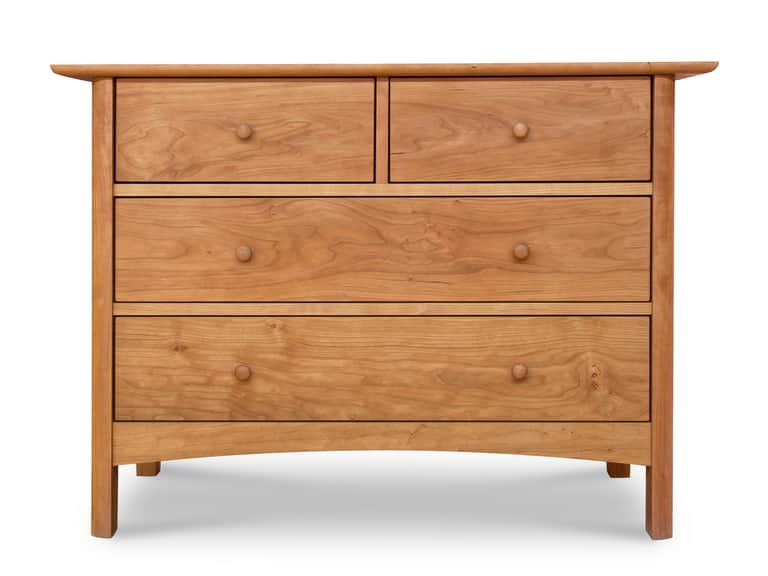
Furniture also contributes to the room’s visual balance. A substantial dresser, such as the solid-wood Heartwood Shaker 4-Drawer Dresser, can bring a natural material and simple Shaker lines into a bedroom. When furnishings have a strong grain or an understated form, bedding can complement them without competing: choose colors that sit comfortably beside the wood and let one textile detail carry the emphasis.
Think about movement through the room. A long bed skirt that reaches the floor should not obstruct access to drawers or catch on nearby furniture. Decorative pillows should be easy to set aside, and extra blankets need a practical home. A coordinated look works best when the room remains easy to use.
For a small bedroom, a restrained palette and a few deliberate layers can help maintain a sense of openness. In a larger room, stronger patterns or additional textures may create a more intimate focal point. Neither approach is a strict rule; the right arrangement is the one that respects the room’s proportions and the way its occupants use it.
A simple sequence for choosing bedding
When comparing options, move from function to appearance. This keeps a tempting color or pattern from distracting from a poor fit or impractical care requirement.
- Identify the essential layers. Decide whether you need a duvet cover, a bed skirt, shams, or a complete set—and which pieces you already own.
- Measure the bed and inserts. Record dimensions for the mattress, duvet insert, pillows, and bed-skirt drop as applicable.
- Review materials and construction. Consider the feel, weight, texture, closures, trims, and any details that may affect durability or laundering.
- Read the contents and care information. Confirm exactly what a set includes, whether inserts are supplied, and how each component should be cleaned.
- Choose a visual direction. Select a dominant color or pattern, then add complementary shades and textures in a measured way.
- Check the whole room. Consider the frame, furniture, floor space, and daily routine before deciding how many layers to use.
This order makes the decision more manageable. It also leaves room for personal style: the practical foundation can be dependable, while accents change over time with the season or the mood of the room.
A pulled-together bed, made for everyday life
Coordinated bedding does not depend on buying every piece at once or matching every fabric exactly. It depends on understanding how the layers work together. A duvet cover protects an insert and gives the bed a changeable outer surface. A bed skirt finishes the lower edge when the frame and dimensions allow for one. Shams add color, pattern, and texture while keeping pillows enclosed.
Measure carefully, read the product details, and let materials and care instructions influence the decision as much as appearance. A set can offer an easy starting point; separate pieces can provide greater flexibility; and a combination of the two can be both cohesive and practical.
In the end, a well-coordinated bed is not simply one that looks complete in a photograph. It is one that fits the frame, feels comfortable, suits the room, and can be cared for without unnecessary difficulty. When each layer earns its place, the result is a bedroom that feels settled and welcoming—ready for rest, and ready for the routines of the day ahead.